Solar Feasibility Services for Residential & GHS Projects (1 kW – 10 kW)
Ecohouse Renewables India Pvt LtdEcohouse® Renewables India Pvt. Ltd. is a professional marketplace dedicated to the solar industry. The platform enables EPC companies, vendors, and installers to connect and trade high-quality solar products with confidence.
Through Ecohouse, users can explore a wide range of verified components — including panels, inverters, cables, and mounting systems — sourced from trusted manufacturers across India.
Ecohouse aims to make solar procurement transparent, efficient, and accessible, supporting the growth of clean energy businesses nationwide.https://www.ecohouseindia.com/s/6891ce51ed79fa3bec03b65c/68c3d231b125eca138bb7ce8/480px-x-118px-ecohouse-logo-480x480.png
Commercial Shop No 1 , Ground Floor C Wiing , Arihant City Pride, Shivaji Nagar Ratnagiri 415612415612RatnagiriIN
Ecohouse Renewables India Pvt Ltdhttps://www.ecohouseindia.com
Commercial Shop No 1 , Ground Floor C Wiing , Arihant City Pride, Shivaji Nagar Ratnagiri 415612Ratnagiri, IN
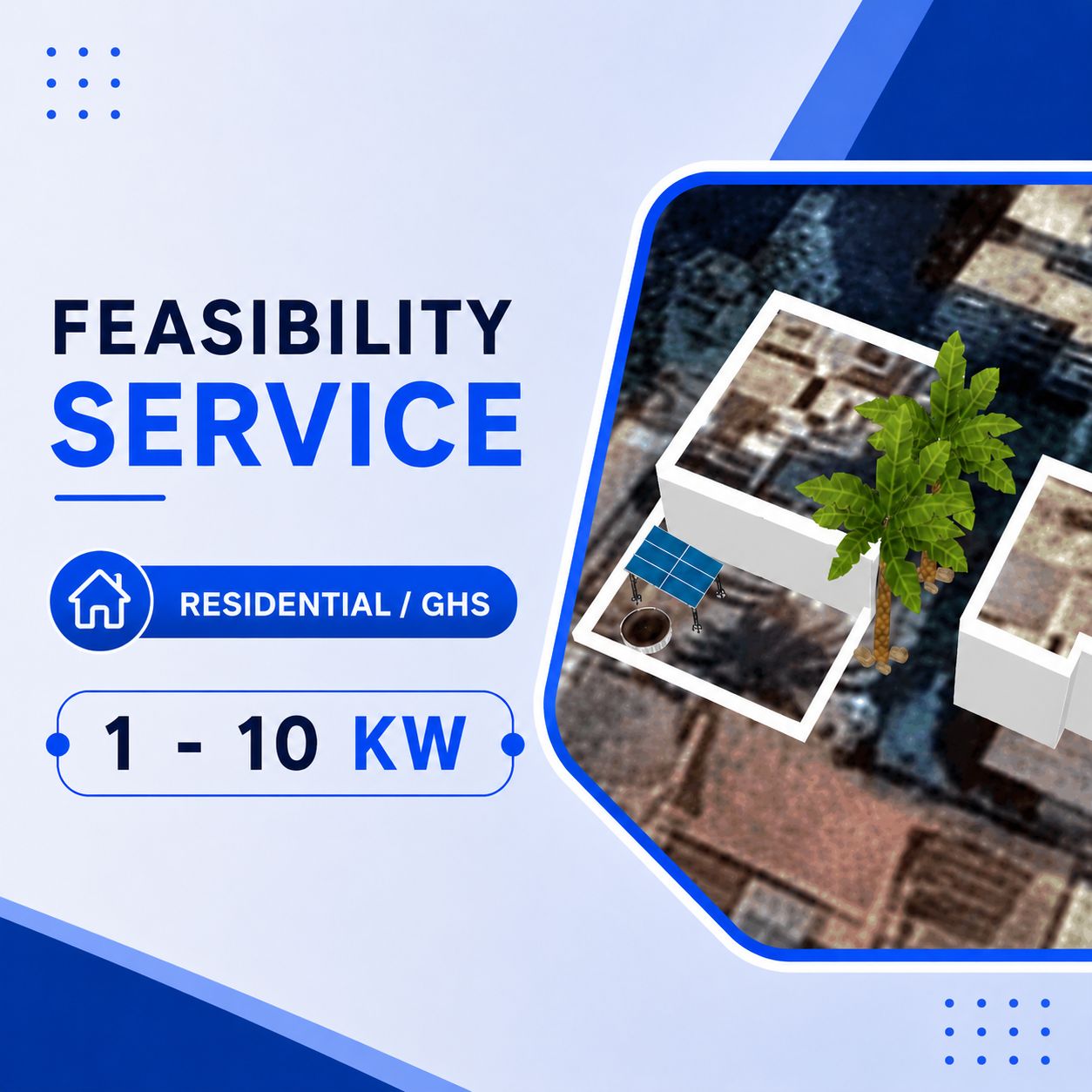
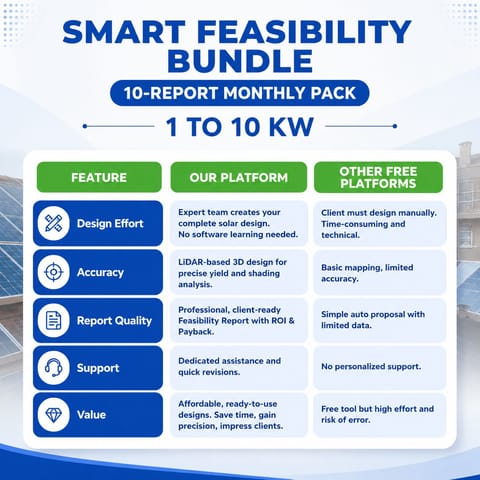
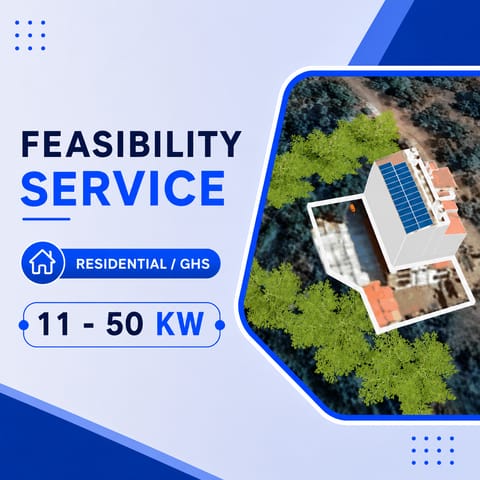
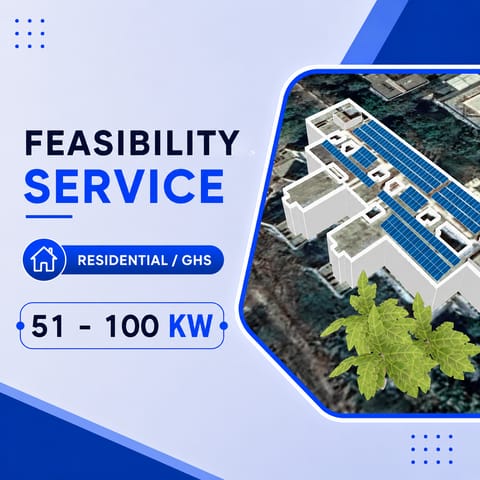
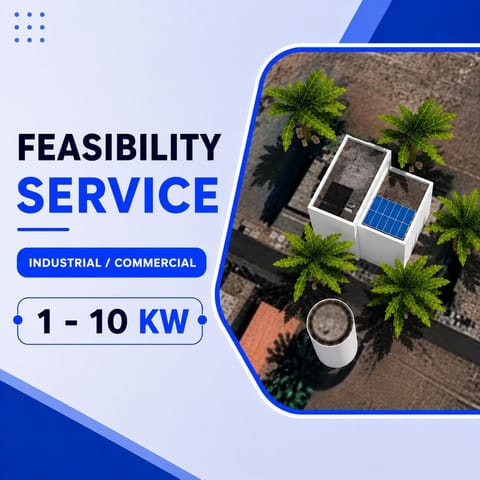
Our Feasibility Services for Residential and Group Housing Society (GHS) solar projects in the 1 kW to 10 kW range are designed to help homeowners and small housing societies plan their solar energy transition with confidence.
This service ensures that your solar installation is technically optimized, financially viable, and fully compliant with local regulations, while delivering long-term savings and sustainability.
What’s Included in Our Feasibility Report:
1. System Metrics & Component Overview
Assessment of system size and technical specifications based on household or shared electricity needs.
Selection of reliable and efficient solar panels, inverters, and mounting structures.
Technology recommendations for durability and performance.
2. Expected Annual Production
Estimation of annual solar energy generation based on location and site conditions.
Helps determine how much of your electricity demand can be met by solar power.
3. Monthly Production Table
Month-wise projections of solar output and consumption coverage.
Useful for budgeting and understanding seasonal variations.
4. Rooftop Layout & Space Utilization
Optimal design for limited rooftop space, ensuring maximum energy output.
Planning for easy maintenance and potential future expansion.
5. Shadow Analysis
Identification of shading impacts caused by nearby trees or structures.
Solutions to reduce shading losses and maximize efficiency.
6. Irradiance Map / Solar Access Report
Mapping of sunlight exposure to identify the best-performing areas for panel installation.
Helps ensure maximum generation throughout the year.
7. System Production Losses
Analysis of common loss factors like inverter conversion, wiring inefficiencies, and temperature effects.
Recommendations to improve performance and reduce losses.
8. Financial Feasibility & ROI
Cost estimates with payback period and ROI calculations.
Guidance on government subsidies, incentives, and net-metering benefits.
9. Regulatory & Compliance Support
Assistance with approvals and documentation for net metering and DISCOM compliance.
Ensures that the project meets all safety and quality standards.
10. Implementation Plan
Step-by-step execution roadmap for smooth installation.
Tips for operation and maintenance (O&M) to ensure consistent performance.
Why This Service is Important:
For individual homes and small housing societies, this feasibility study helps you:
Plan your solar project effectively with accurate technical and financial insights.
Avoid costly mistakes through proper analysis and design.
Ensure compliance with local regulations and safety requirements.
Maximize long-term savings through efficient system design and performance.
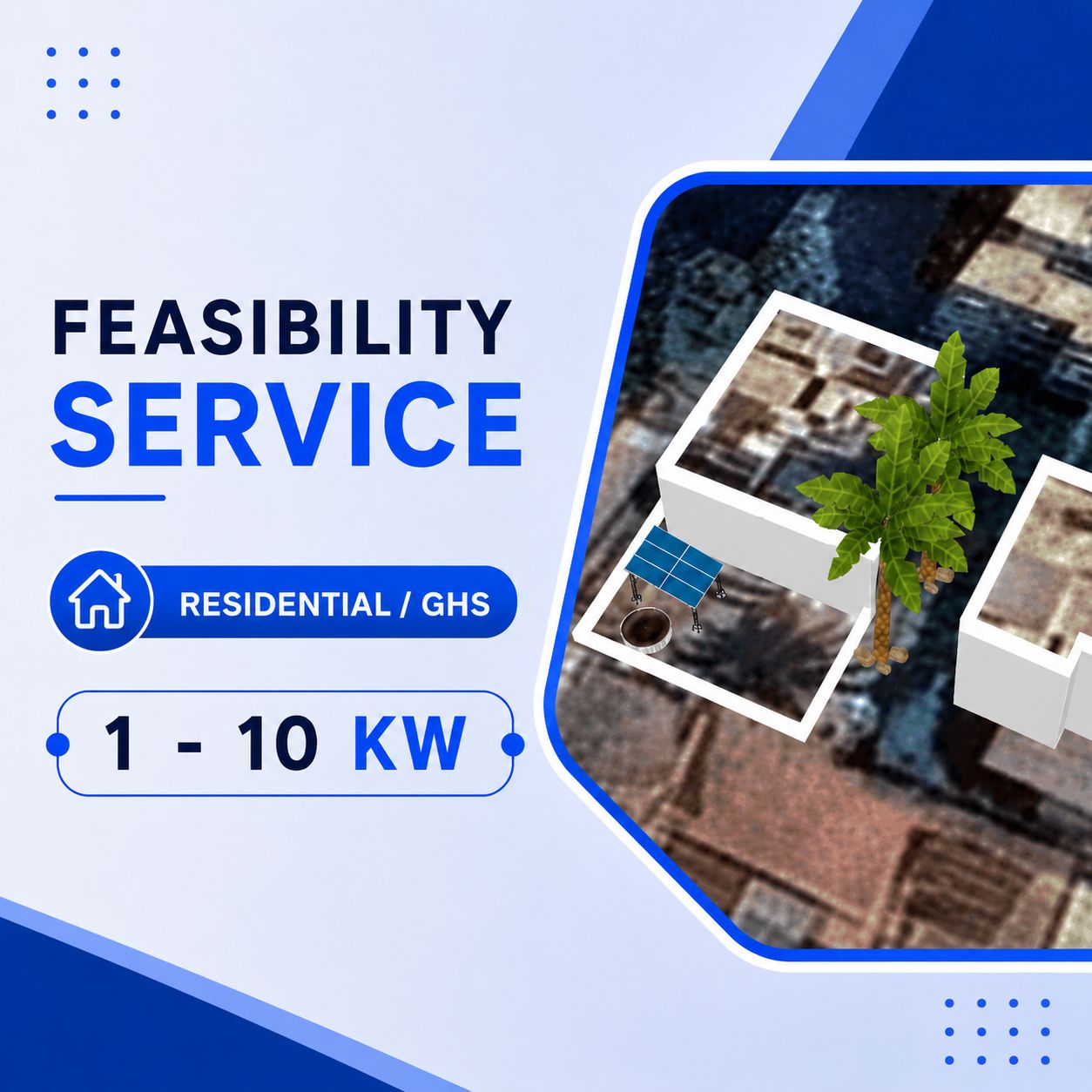
Our Feasibility Services for Residential and Group Housing Society (GHS) solar projects in the 1 kW to 10 kW range are designed to help homeowners and small housing societies plan their solar energy transition with confidence.
This service ensures that your solar installation is technically optimized, financially viable, and fully compliant with local regulations, while delivering long-term savings and sustainability.
What’s Included in Our Feasibility Report:
1. System Metrics & Component Overview
Assessment of system size and technical specifications based on household or shared electricity needs.
Selection of reliable and efficient solar panels, inverters, and mounting structures.
Technology recommendations for durability and performance.
2. Expected Annual Production
Estimation of annual solar energy generation based on location and site conditions.
Helps determine how much of your electricity demand can be met by solar power.
3. Monthly Production Table
Month-wise projections of solar output and consumption coverage.
Useful for budgeting and understanding seasonal variations.
4. Rooftop Layout & Space Utilization
Optimal design for limited rooftop space, ensuring maximum energy output.
Planning for easy maintenance and potential future expansion.
5. Shadow Analysis
Identification of shading impacts caused by nearby trees or structures.
Solutions to reduce shading losses and maximize efficiency.
6. Irradiance Map / Solar Access Report
Mapping of sunlight exposure to identify the best-performing areas for panel installation.
Helps ensure maximum generation throughout the year.
7. System Production Losses
Analysis of common loss factors like inverter conversion, wiring inefficiencies, and temperature effects.
Recommendations to improve performance and reduce losses.
8. Financial Feasibility & ROI
Cost estimates with payback period and ROI calculations.
Guidance on government subsidies, incentives, and net-metering benefits.
9. Regulatory & Compliance Support
Assistance with approvals and documentation for net metering and DISCOM compliance.
Ensures that the project meets all safety and quality standards.
10. Implementation Plan
Step-by-step execution roadmap for smooth installation.
Tips for operation and maintenance (O&M) to ensure consistent performance.
Why This Service is Important:
For individual homes and small housing societies, this feasibility study helps you:
Plan your solar project effectively with accurate technical and financial insights.
Avoid costly mistakes through proper analysis and design.
Ensure compliance with local regulations and safety requirements.
Maximize long-term savings through efficient system design and performance.